
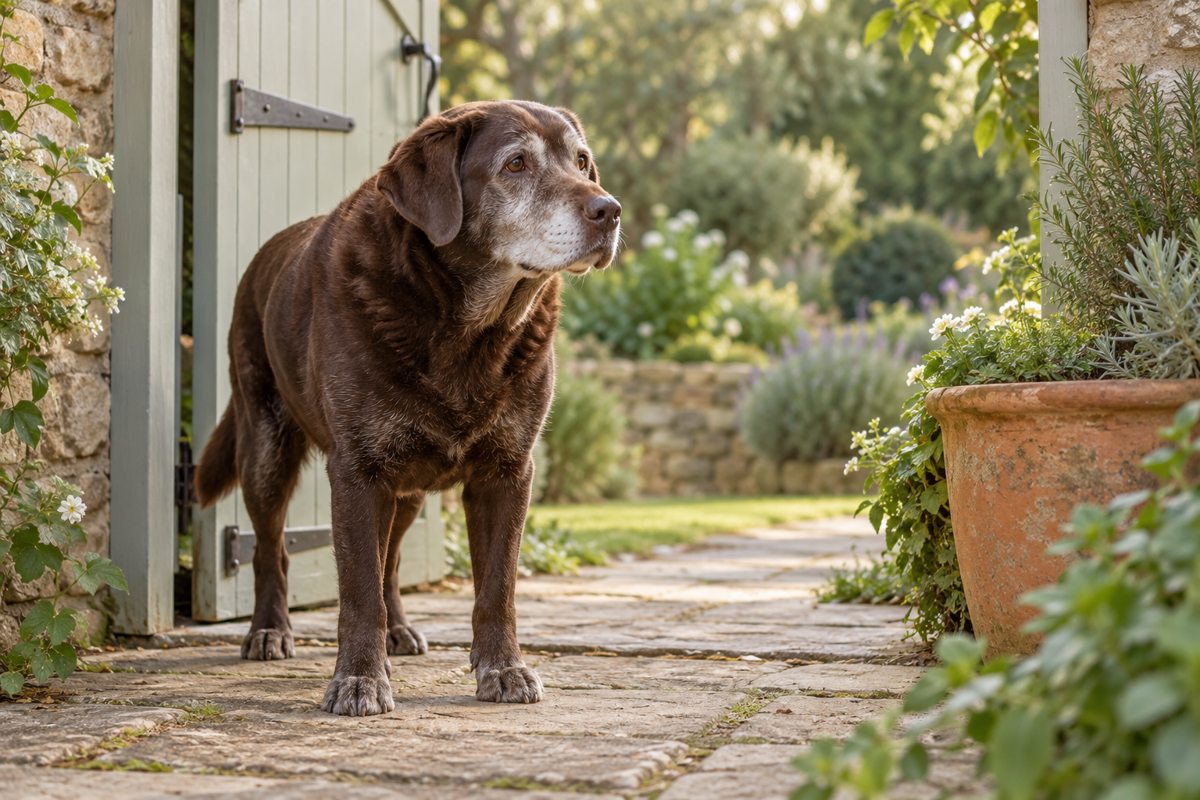
The change you may notice
When a previously house-trained dog starts urinating or defecating indoors, it can be frustrating and may signal that something has changed. House-soiling is included among the behavior domains considered in CCDS, but it is not specific to cognitive dysfunction. Urinary or digestive problems, pain, mobility limits, changes in access or routine, and other conditions may contribute.
What to observe
Do not assume an accident is deliberate or punish your dog. Clean the area and make the route to the usual toileting place as safe and accessible as possible. Arrange a veterinary appointment for new or recurring accidents, especially if the pattern is worsening.
Practical next steps
Record whether the accident involved urine or stool, when and where it happened, frequency, changes in thirst or appetite, mobility, access to outdoors, routine, and any medication changes. Note whether your dog signaled or seemed unaware. Bring the information to the appointment; your veterinarian may ask about the pattern and decide whether examination or testing is needed.
Talking with your veterinarian
If the change is sudden, severe, or your dog seems acutely unwell, contact a veterinary service promptly. A behavior log can support the discussion, but it cannot distinguish medical causes or diagnose CCDS.
Editorial note: Educational information. It does not diagnose CCDS or replace veterinary care. Discuss new or worsening changes with a veterinarian.
Sources
- Olby et al. (2026), CCDS Working Group guidelines, JAVMA
- North Carolina State University (2026), CCDS diagnostic and monitoring guidelines
- 2023 AAHA Senior Care Guidelines: Cognitive Dysfunction and Behavioral Anxiety
- Cornell Riney Canine Health Center: Cognitive Dysfunction Syndrome
Source check: October 2026. Not individually reviewed by a veterinarian.
A description is a good starting point.
Try three short lines: what happened, when it happened, and what you would like to ask. Use the words you would use to describe a moment to someone who was not there.
Example format: “At [time], in [place], I noticed [observable behavior]. It lasted [duration]. My question is [question].”
This is a writing prompt, not a test or a diagnostic checklist.