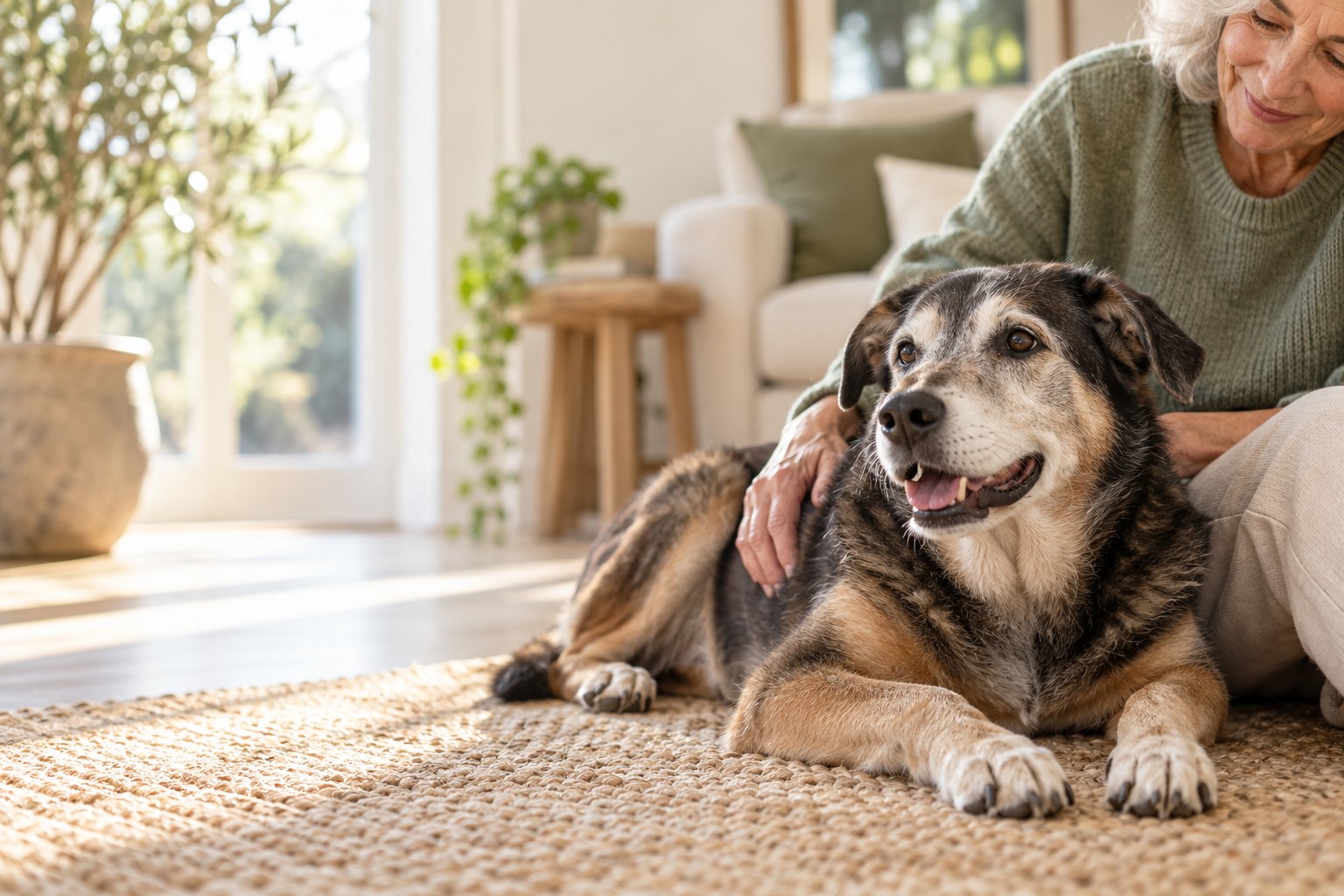
The big picture
Canine Cognitive Dysfunction in Dogs: Signs, Diagnosis & What to Do
What cognitive dysfunction means, which signs overlap with other conditions, and where to start.
Read the guide Better Pet YearsMORE CLARITY. MORE SHARED YEARS.

Thoughtful guidance for your dog’s changing years.
Notice the small changes, organize your observations, and prepare for a clearer conversation with your veterinarian.
Start with what you see in everyday moments.
Explore clear guides with sources and context.
Bring useful notes and the questions that matter.
You don’t need to have the answer.
Start with the question closest to home.

You know your dog’s usual ways. When something changes, a clear description can be more useful than a label.
Our introductory guide explains cognitive changes, why similar signs can have different causes, and how to prepare for veterinary advice.
Understand cognitive changes →Read: aging or something more?What cognitive dysfunction means, which signs overlap with other conditions, and where to start.
Read the guide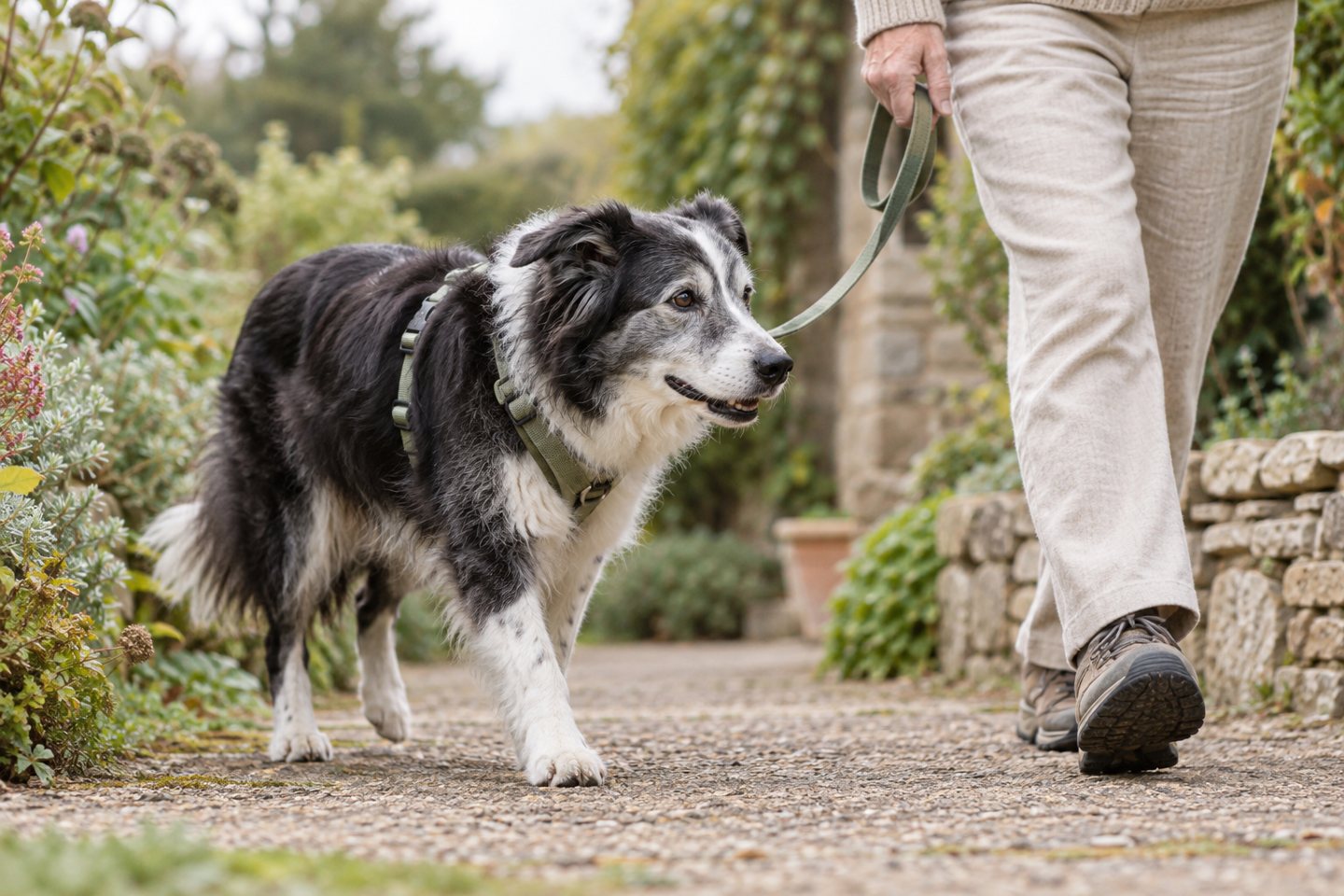
Small shifts in sleep, interaction and routine: how to describe what you are seeing.
Read the guide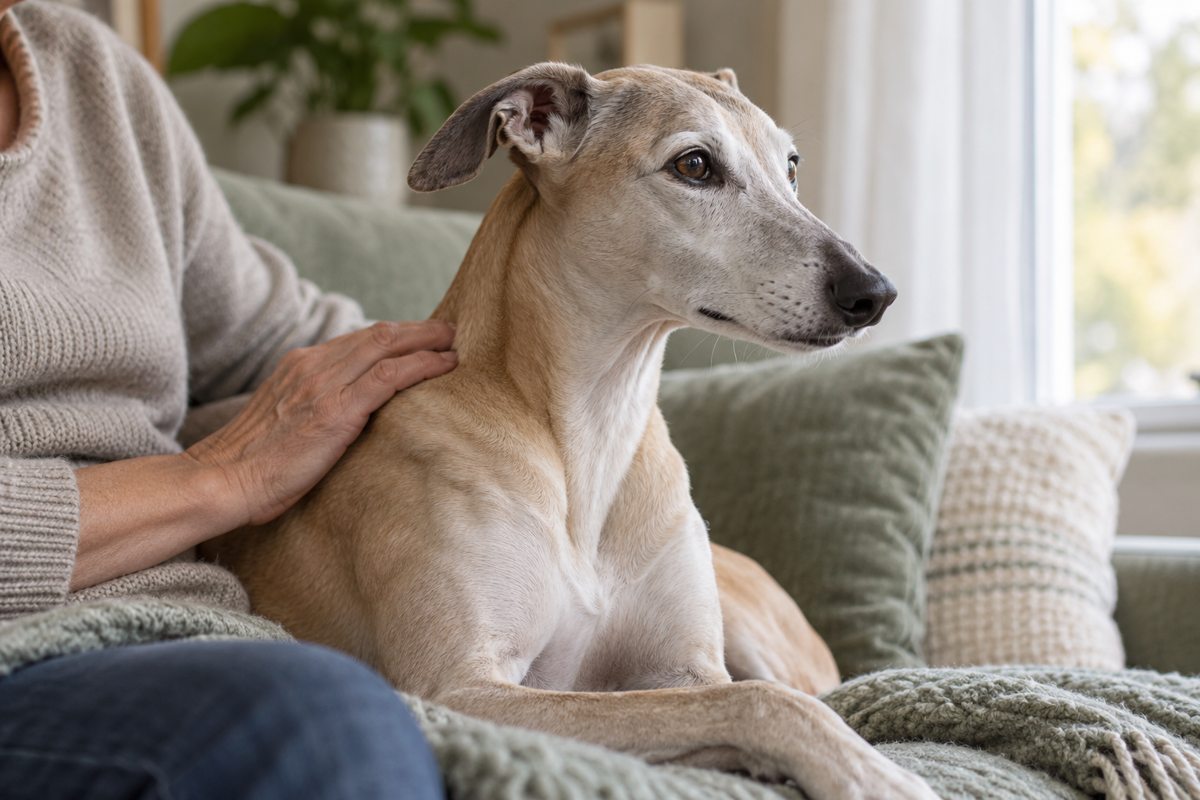
Compare changes with your dog’s own baseline and know when to ask for help.
Read the guideWhen you’re worried, details can be hard to remember. A simple record gives you somewhere to put them.
Open the free observation log →Write what you saw or heard, without deciding what it means.
Include the date, time, setting and anything different about the routine.
Use your notes to explain the pattern at your veterinary appointment.
Record the pattern of waking, pacing and settling before your appointment.
Read the guideHelp your dog stay safe and keep useful notes about disorientation.
Read the guideWhat to observe when a previously house-trained dog has accidents.
Read the guideWhat to bring, what a veterinarian may check, and questions worth asking.
Read the guideThere is a lot of information about older dogs. Finding a calm, useful starting point can be harder.
We bring practical guides, clear sources and simple tools together, so you can spend less time sorting through uncertainty and more time understanding what you’ve noticed.
Read our approach →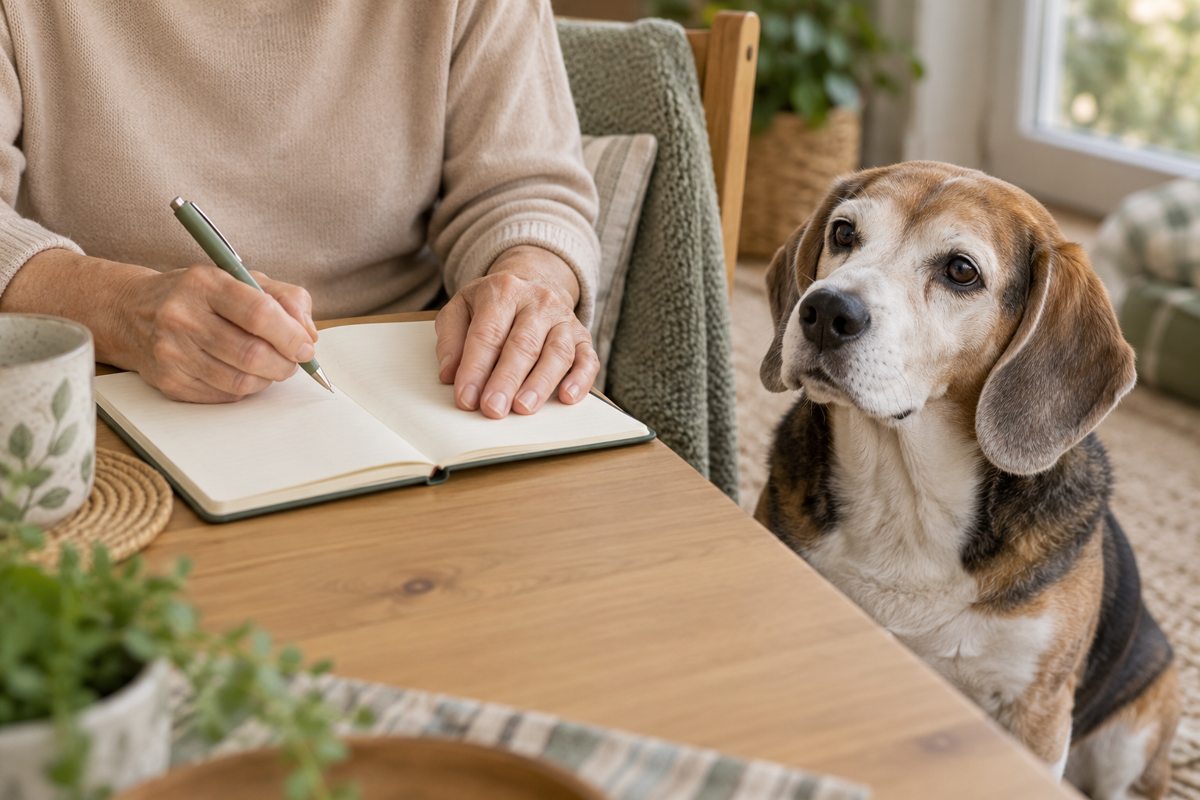
Pick the guide closest to what you have noticed, or begin with our introduction to cognitive changes. The observation log helps you organize examples for a veterinary conversation.
No. It is a record of observations and questions. There is no diagnostic score and it cannot tell you why your dog’s behavior has changed.
The guides link to veterinary sources but have not been individually reviewed by a veterinarian. Our editorial approach explains their scope and limitations.
Yes. Open the log and use “Print or save as PDF.” No email sign-up is required, and the page does not submit your notes to us.